
DISHWASHER
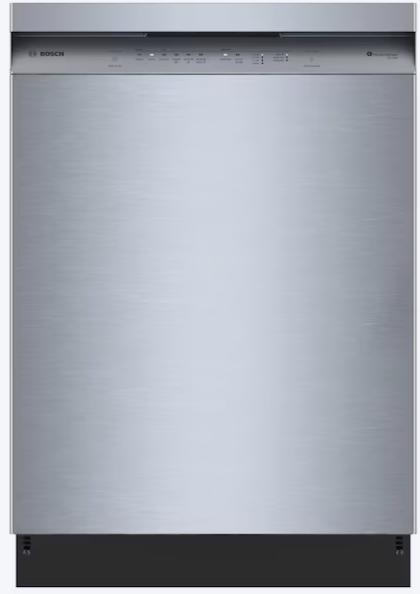
Bosch 300 Series
Operating guide for the Bosch 300 Series 24-in front control built-in dishwasher, including loading, detergent, cycle selection, and the third rack.
01
Loading the racks
The dishwasher has three racks. Scrape food scraps into the trash before loading — this model does not require pre-rinsing, but heavy scraps can still clog the filter.
Bottom rack
Plates, bowls, and pots go on the bottom rack. Face soiled surfaces toward the center where the spray arm has the most reach. Leave space between items so water can circulate.
Top rack
Glasses, cups, and smaller bowls go on the top rack. Place glasses over the tines rather than resting them flat, and angle bowls downward so they don't collect standing water.
Third rack (utensil rack)
The slim rack at the very top is for flatware and long utensils. Lay items flat with space between them rather than bunching them together — this gets better wash coverage than a traditional silverware basket and keeps sharp knives separated from your hands during unloading.
02
Detergent and rinse aid
The detergent dispenser is the small flap on the inside of the door. It accepts pods, powder, or gel — close the flap until it clicks after filling.
The rinse aid dispenser is the smaller cap next to the detergent flap. Rinse aid helps dishes and glassware dry spotless and speeds up drying — refill it when the indicator window looks empty or light-colored.
03
Selecting a cycle
The control buttons are on the top edge of the door, visible when the door is open. Press the button for the cycle you want — the indicator light above it will confirm your selection.
| Cycle | Best for |
|---|---|
| Auto | Everyday mixed loads — sensors adjust water use and time to how soiled the load is |
| Normal | Regular, moderately soiled dishes |
| Heavy | Pots, pans, and baked-on or heavily soiled dishes |
| Delicate | Glassware and fragile items |
| Express Wash | A fast cycle for lightly soiled dishes when you're short on time |
Options
Sanitize adds a high-temperature rinse for extra sanitizing. Extra Dry extends the drying phase, useful for plastics. Half Load washes only the top or bottom rack when you don't have a full load. Press an option button before starting to add it to your selected cycle.
04
Starting the dishwasher
- Load and latch the door.
- Select a cycle and any options.
- Press Start. If the door is opened partway through, the cycle pauses automatically and resumes a few seconds after the door is closed again.
Is it running?
This dishwasher is rated at 50 decibels — quiet enough that it's hard to tell by ear whether it's running. Look for a small red light projected onto the floor beneath the door; the light stays on while a cycle is active and turns off when the cycle finishes.
PrecisionWash and PureDry
Sensors continuously check water clarity during the wash and adjust automatically. PureDry uses a fan-assisted drying process rather than a visible heating element, so give dishes a few extra minutes after the cycle ends before unloading if anything still feels slightly damp — this is normal, especially for plastics.
05
Care and cleaning
Filter
The filter sits at the bottom of the tub beneath the lower spray arm. Twist and lift it out periodically to clear trapped food debris, rinse under the tap, and reseat it. A clogged filter is the most common cause of dishes coming out gritty or with a lingering odor.
Exterior
Wipe the stainless steel door and control panel with a damp cloth, wiping in the direction of the grain to avoid streaking. Avoid abrasive cleaners or pads.
06
Troubleshooting
Dishwasher won't start
Make sure the door is fully latched — the dishwasher will not run with the door ajar. Confirm a cycle button is lit before pressing Start.
Standing water in the bottom
A small amount of water pooled around the filter at the end of a cycle is normal. If there's a large amount of standing water before a cycle starts, check that the filter is seated correctly and let us know if it persists.
Dishes still dirty
Check that spray arms aren't blocked by tall items in the bottom rack, and that the filter isn't clogged. Overloading the racks can also block water from reaching every dish.
Spots or film on glassware
This is usually a sign the rinse aid dispenser is empty. Refill it and run the next load on Normal or Auto.
Still having trouble?
Please contact us through the booking platform. We're happy to help.